

A useful wholesale used-engine quotation tells you what you are buying and what the price covers. Comparing only the engine code and the lowest unit price can leave gaps in your purchasing plan. Start with the same requirement for every supplier, then compare the evidence for the actual units offered.
Check who you are buying from
A quotation is only as useful as the company behind it. Before comparing prices, ask for the legal entity name that will appear on the pro forma invoice, the registered address and the export documents the company will issue. Confirm the account the company expects payment to. Some suppliers legitimately collect through an affiliated company or an authorised agent, so the practical test is not whether every account name matches exactly, but whether the arrangement is documented: ask the company to confirm the beneficiary in writing on its invoice or letterhead, and confirm any change of account through an independent channel rather than only in the same email thread.
Supply capability is a separate question from price. Ask where the offered units are held, whether the supplier works from its own premises or through partner dismantling yards, and who performs the identification and photo records you will receive. A list of previously handled models describes history; it does not confirm that the quantities on your list are available together now. Request a current supply check for the exact models and quantities you need.
Send one consistent buying requirement
List the engine code, vehicle application, model year and market, transmission and drivetrain configuration, required accessories, quantity per model, and destination country or port. If you have an engine nameplate photo or an OE reference, include it. Explain whether your business needs a complete assembly or another scope; ask the supplier to describe exactly what their offer includes.
For a mixed batch, write each model and its quantity on a separate line. Do not treat a directory of previously handled models as confirmation that all quantities are available together. Ask for a current supply check before comparing prices.
Compare the offered units on the same basis
| Quotation item | What to record |
|---|---|
| Unit identity | Engine code, visible identifier and the photos or video tied to each offered unit. |
| Condition | Visible damage, known defects, missing parts and any documented checks. Record information that remains unknown. |
| Included parts | Accessories, wiring, ECU and transmission when relevant. Write exclusions as well as inclusions. |
| Batch | Quantity confirmed for each model and whether the proposed units can be supplied as one order. |
| Packing | Agreed method, packed dimensions and weight when available, and any separately quoted packing charges. |
| Freight scope | Named destination, agreed delivery scope and costs excluded from the offer. |
| Commercial terms | Price validity, payment terms, inspection window and written after-sales terms. |
Reference images and actual unit photos
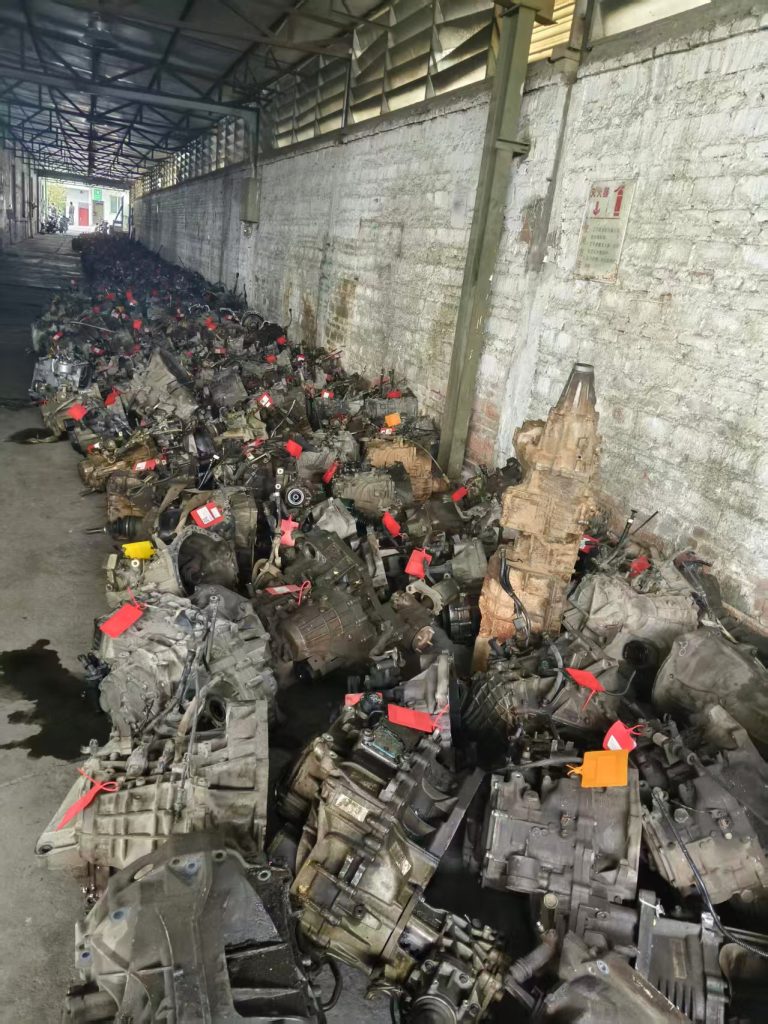
Catalogue or reference images illustrate a model family rather than a specific engine for sale, and they are common in this trade. Neither type is a problem on its own, as long as the two are labelled differently and you know which one you are looking at. For each image you receive, ask directly: is this the actual unit being quoted, or a reference picture? If the photo set was taken for an earlier order, ask whether it still shows the unit now offered.
Confirmation is usually simple to request: a readable nameplate or engine number within the same photo set, a view of the accessories included in the quotation, and a dated photo or short video that ties the unit to the same identifier. Where our own pages use a photo only as context, it is captioned as such and is not presented as a specific unit for sale or as proof of a shipment.
Ask what was checked, and what was not
Records sit on a scale. Identification photos, a visible-condition note, an accessory list, a manual crank-rotation record and a running video answer different questions. Ask which of these exist for the unit offered, who performed each check, and whether the record belongs to that same unit. A request you can make is not the same as a service a supplier provides: ask which of these that supplier actually offers for your order, and in what form.
Record what was not done as well. If no compression, bench or startup test was performed, write that on your comparison sheet rather than leaving the field blank, because an empty field is easily read as “probably fine”. Our own standard checks cover identification, visible condition, included accessories, manual crank rotation and photo records; they are not compression, bench or startup testing.
Understand source-direct pricing
Lesvant purchases through partner vehicle dismantling yards in China. Direct sourcing supports competitive wholesale pricing, while the actual quote still depends on condition, included parts, quantity, packing and freight arrangements. A source-direct offer is most useful when it is linked to clearly identified units and a defined batch requirement.
Ask whether quoted prices are for the engine units alone or for a wider delivery scope. If one supplier includes an accessory and another excludes it, note that difference before comparing the figures. A lower starting price is not enough to establish a lower total purchase cost. Name the freight term explicitly as well, because a CIF figure and an FOB figure for the same batch are not comparable. Our guide to FOB and CIF for used engine orders sets out what each term includes and what stays outside the quoted price.
Worked example: when the lower engine price costs more
Compare the cost of meeting the same written requirement, then assess condition and evidence separately. The figures below are hypothetical USD amounts for 10 engines, not Lesvant prices or a current offer. Assume the engine specification, required accessories and packing standard are the same.
| Cost for the batch | Offer A | Offer B |
|---|---|---|
| Engines | 10 × $300 = $3,000 | 10 × $330 = $3,300 |
| Required accessories missing from the engine price | $300, separately confirmed | Included: $0 extra |
| Agreed packing | $200 | $150 |
| Subtotal for the same defined scope | $3,500 | $3,450 |
Offer B is $50 lower for this defined scope despite its higher engine unit price. Neither subtotal is a landed cost: freight, insurance, destination charges, clearance, taxes and inland delivery are outside this example.
- Do not enter $0 for an unknown charge or an unconfirmed accessory. Mark it “Pending” and leave the final comparison open.
- A lower subtotal does not establish equivalent condition, fitment or test evidence. Review the actual units before choosing.
- For a mixed order, repeat the calculation for each exact engine configuration, then add shared charges once.
Include each engine code and quantity, required accessories, country/port and unresolved questions. We will review the requested supply and quotation scope. For example, “1NZ-FE × 10; accessories: to confirm; destination: [your port]” is a purchasing request, not a stock claim.
Send the same comparison list to Lesvant
Keep unresolved points visible
Use a simple comparison sheet with a separate column for questions. If a unit’s identifier is unclear, an accessory has not been confirmed, or a packing charge is still pending, keep it marked as unresolved. If the supplier substitutes a different unit, request updated photos and condition details for that unit.
Before payment, make sure the written quotation or order record matches the final unit list, quantities, price and agreed terms. A quotation’s validity period should not be assumed to reserve stock unless that arrangement has been confirmed.
Before you pay: warranty, terms and delivery responsibility
Where warranty applies, ask for the period, the parts or failures covered, the deadline for reporting an issue, who decides a claim, and the remedy: repair, replacement, credit or refund. A general statement that support is available is not a defined term. If coverage is agreed per order, say so explicitly in the quotation or pro forma invoice rather than relying on an earlier message.
Delivery responsibility belongs in the same written record: the named destination, who arranges and pays for each leg, who clears import, what happens if a unit arrives damaged, and which documents are handed over. Two quotes can only be compared when both state the same scope.
Payment sequence. Ask what each payment releases before you send it. A common structure is a deposit that starts preparation and a balance before shipment; where that is the arrangement, agree which unit records and documents you receive before the balance falls due, and which shipment documents follow afterwards. Confirm the beneficiary against the pro forma invoice rather than against a message, and if the bank details change at any point, verify the new details through an independent channel you already hold. Where payment goes to an account other than the invoicing entity’s own — an affiliated company or an authorised agent, for example — ask for that arrangement to be stated in writing on the invoice, so the account and the order record agree.
Keep the record together. The pro forma invoice, the agreed unit list, the payment confirmation and the shipping documents should all describe the same order. If a term is still open on the day a payment falls due, treat that as a reason to pause rather than a detail to settle later.
Request a batch quotation from Lesvant
Send our sourcing team your model list, quantities, vehicle details and destination. Our team will check partner-yard supply and quote the actual available units. Lesvant serves wholesale trade buyers and does not accept consumer retail orders.
Request a wholesale used-engine quote or use the engine reference directory to prepare your model list.